Property managers can prevent wildfire losses by managing defensible space, hardening buildings, and maintaining fire safety systems year-round.
Wildland–Urban Interface (WUI) risk is often decided in the first few meters around a building. Embers, nearby “residential fuels” (ornamental vegetation, outdoor plastics/furniture, LPG tanks), and openings/roof–eave details are the dominant ignition pathways not distant firebreaks. That’s why defensible space / the Home Ignition Zone (HIZ) is central: design the near-building environment to reduce flame contact, break horizontal/vertical fuel continuity, and lower heat before it reaches the structure.
HIZ subdivides defensible space into zones with different fuel goals: an immediate non-combustible zone to reduce direct flame contact; an intermediate zone to slow spread by breaking vertical/horizontal fuel continuity; and an extended zone to interrupt the fire’s path.
What Is a Fire Risk Management Plan?

Fire Risk Management Plan is a living system that combines building hardening, defensible-space fuel management, and operational readiness (access, water, alarms, procedures). It maps risks at the parcel scale vegetation, LPG tanks, decks, openings and sets testing, maintenance, and record-keeping into a repeatable cycle. The goal is simple: lower ignition likelihood and impact, then prove it with documentation.
A practical plan works as a living system that integrates:
- Building hardening (ember-resistant roof/eaves/openings).
- Defensible-space fuel management (zoned spacing, pruning, removal of ladder fuels, safer species and materials).
- Operational readiness (access routes, reliable water/pumps, alarm/notification, documented procedures).
It should also include parcel-scale choices vegetation selection/placement, LPG tanks, decks/outbuildings and be reviewed as seasons, occupancy, and landscaping change. Think of risk as likelihood × impact, reduced by these layers.
Plan cycle: prepare → implement → record inspections/tests/maintenance → review/adjust. Keeping records is essential for both resilience and compliance. Scientific perspectives on wild…
Who Can Carry Out a Fire Risk Assessment?
Certified Fire Risk Assessors
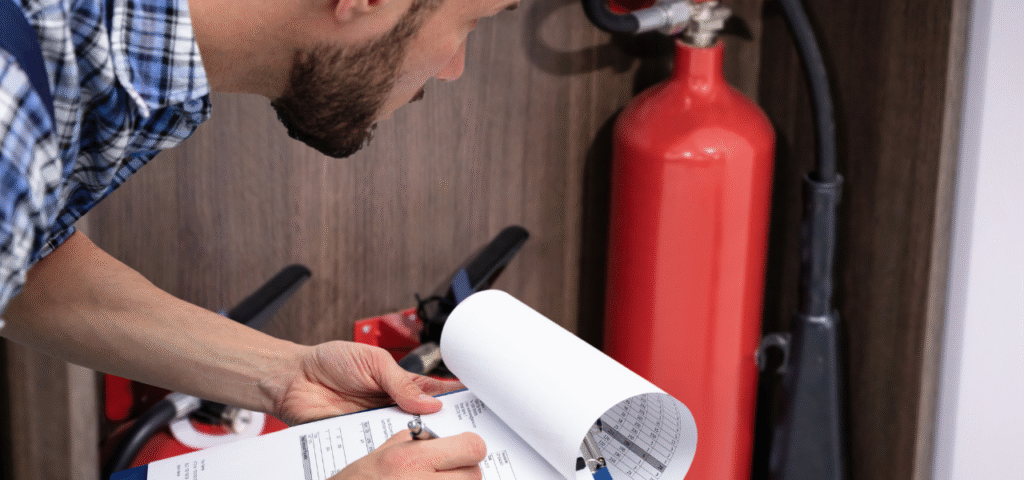
In many jurisdictions, a Fire Risk Assessment for non-domestic/common-area properties is a legal duty. Use third-party-certified specialists e.g., schemes such as LPCB LPS1014 and BAFE SP203-1, ideally with UKAS validation and ensure alarm work meets BS 5839.
Role of Property Managers in Assessment Coordination
The PM scopes what’s assessed (common areas; alarms/egress/doors/sprinklers), keeps testing/servicing on schedule, and documents outcomes. Simple premises may get by with basic smoke/heat coverage; once risks/complexity rise (vulnerable occupants, complex layouts, WUI exposure), bring in accredited professionals to meet legal and technical requirements.
What Are the 5 Main Components of a Fire Risk Assessment?
1) Identifying fire hazards
Don’t limit “hazards” to wildland fuels. In WUI settings, the biggest ignition drivers right outside the envelope are residential/man-made fuels (sheds, outdoor furniture, toys, vehicles, stored materials) and LPG tanks, alongside ornamental vegetation and debris. These items ignite via embers, radiant heat, or direct flame; plastics can melt and double their flaming surface, amplifying heat exposure. Codes often focus on plant spacing but give fewer rules for spacing between man-made fuels and structures so you must map and manage those gaps explicitly.
2) Determining people at risk
Profile who’s on site and the local response capacity. Vulnerable occupants (older adults, very young people, people with disabilities) change alarm/egress needs, staffing, and training cadence. Also factor community resources and policies; risk management level depends not just on fuels but on the people and support systems available during an incident.
3) Evaluating & reducing risks
Apply the Home Ignition Zone (HIZ) logic: design near-building zones with different objectives an immediate non-combustible zone to prevent flame contact; an intermediate zone to break horizontal/vertical fuel continuity; and an extended zone to interrupt the fire’s path. Don’t just pick “low-flammability” species arrangement and maintenance (discrete patches, removal of ladder fuels, managing understory/canopy density) are what actually cut heat exposure. Where possible, validate designs with physics-based analysis or proven guidance; modelling studies highlight how maintenance levels and vegetation patterns materially change exposure to flame and radiation.
4) Recording & communicating findings
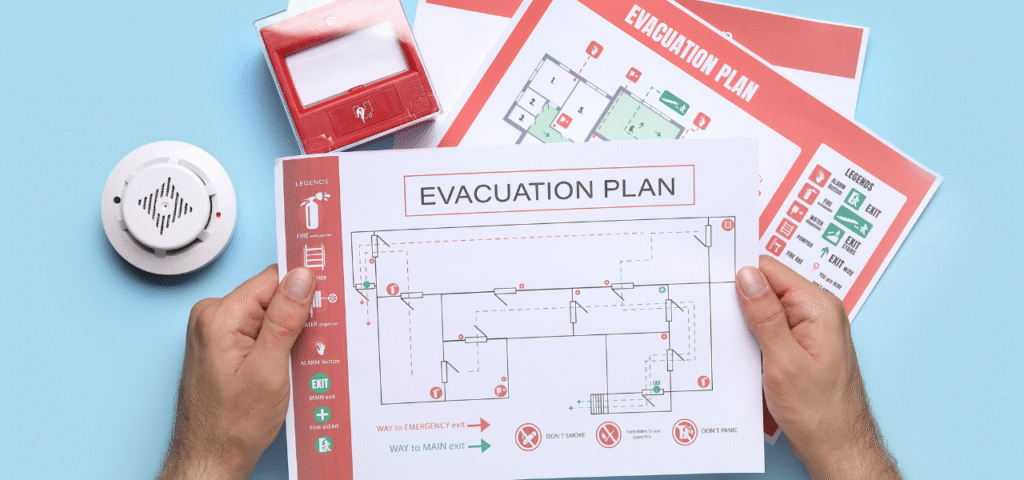
Turn findings into evidence: annotated plans, photos, and a maintenance/testing schedule everyone can follow. Use a simple, standardized checklist to track vulnerability fixes and keep responsibilities clear across managers, contractors, and residents. Documentation isn’t just admin checklists and simple tools are an established way to assess property-level vulnerabilities and keep work on track.
5) Reviewing & updating regularly
Treat the assessment as continuous, not one-and-done. Fuels regrow, clutter returns, and seasonal/weather shifts alter exposure; effectiveness depends on how closely principles are applied and maintained over time. Revisit spacing around vegetation and man-made fuel packs (under decks, porches, garages), and re-check safety distances to LPG tanks post-event reviews show these elements drive damage escalation if neglected.
“Risk around houses is lower when trees/shrubs are arranged in discrete patches, horizontal/vertical fuel continuity is broken, ladder fuels are removed, and green vegetation is maintained (moist fuels resist ignition).”
What Is the 10am Rule for Wildfires?
The historic “10am rule” aimed to control fires by 10am the next day. The relevance for property managers is operational: design the site so responders can act early and fast. Keep access tracks open and navigable; ensure pump working space and a dependable water supply near structures; and coordinate shared access/water plans with neighbors so assistance is not delayed. This is how a PM turns “early control” from a slogan into a site capability.
How Much Should a Fire Risk Assessment Cost?

There’s no universal price focus on drivers and compare likeforlike scopes from accredited providers:
- Scale & complexity: single-block/simple plans vs. multi-occupancy/complex layouts change survey time and report depth.
- Standards & accreditation: designing/maintaining to BS 5839, and using providers under LPS1014/BAFE SP203-1 (preferably UKAS validated) affects cost but also quality and liability.
- Systems in scope: alarm type, annual testing cadence, potential sprinkler or static-water/pump provisions.
- WUI extras: access upgrades, water capacity/pressure, pump pads, and verification tests.
Practical approach: collect 2–3 quotes with the same scope; compare accreditation, testing/maintenance cadence, SLAs/response times, and any WUI-specific requirements.
Can I Do My Own Fire Risk Assessment?
For small/simple premises, basic self-checks (housekeeping, signage, simple smoke/heat alarms) may be enough; but once you have vulnerable occupants, higher-risk activities, complex layouts or WUI exposure you should use accredited specialists to meet legal and technical requirements. The PM still owns the scope, schedule, and record-keeping even when using external experts.
Common Mistakes Property Managers Make with Fire Risk

Treating Defensible Space as a One-Time Project (Not a Maintenance Regime)
Creating defensible space is not a “set it and forget it” project. It’s a living system that degrades quickly if ignored. Shrubs regrow, debris accumulates, and moisture levels drop undoing all your initial work. Regular upkeep such as pruning, debris clearing, and checking separation distances must be seasonal and documented. Property managers should schedule recurring maintenance tasks and verify them through inspections or digital logs to ensure compliance and safety continuity.
Ignoring the First Meters: Roofs, Eaves, and Gutters
The majority of home ignitions during wildfires start with embers landing on roofs and gutters. Dry leaves, needles, or dust trapped in roof valleys act as perfect kindling. Clean these areas regularly, install ember-resistant gutter guards, and seal soffit and eave openings. Property managers should add these checks to every post-storm and seasonal inspection because what you don’t see above eye level can easily become your ignition point.
Allowing Easy Ignition Sources (Candles, Balcony Cooking)
Human behavior remains a leading cause of property fires. Candles left unattended, balcony grilling, or smoking near flammable materials can ignite a chain reaction even in low-risk areas. Reinforce no-flame and no-balcony-cooking policies through signage and tenant communication. Provide alternatives like LED candles or designated BBQ areas to reduce violations without friction.
Weak Alarm Discipline (Wrong System, Poor Testing, or No Standards)
Installing an alarm system isn’t enough maintaining and testing it is where most property managers fail. The wrong configuration, skipped maintenance, or non-compliance with standards (like BS 5839 or NFPA 72) leaves you exposed legally and operationally. Keep a formal testing schedule, engage accredited service providers, and retain evidence of every test. A single untested device can compromise an entire system.
Overlooking Man-Made Fuels and LPG Placement Near the Building
Fuels aren’t just plants plastic furniture, wood decks, fences, sheds, and LPG tanks can transmit flames directly to your walls. These elements often sit closer to buildings than code allows. Review and redesign your outdoor layout: increase clearances, break up fuel clusters, and install heat shields or non-flammable barriers around tanks and combustible materials. Each meter of separation you create buys time during a wildfire.
Poor Access and Water Readiness for Early Control
When responders arrive, they need space and supply. Narrow drives, locked gates, or untested pumps can delay control efforts when seconds matter. Maintain wide turning zones for emergency vehicles, confirm hydrants and pumps are tested and tagged, and keep pressure data up to date. Integrate water systems into your annual fire-readiness audit an idle pump is useless when the power’s out.
Relying on Perimeter Firebreaks While Neglecting the Microscale
Property managers often focus on the large-scale perimeter firebreaks, fences, or maps while ignoring the critical few meters around the structure where most losses begin. Embers, wooden furniture, mulch beds, and clutter near façades ignite first. Shift resources to micro-scale actions: harden immediate surroundings, manage flammable décor, and design landscaping that minimizes direct flame paths to walls and openings.
Documentation Gaps (Plans Not Posted, Records Not Kept)
Fire risk management lives and dies by documentation. Missing or outdated evacuation plans, absent alarm maintenance logs, and unrecorded training sessions undermine even the best policies. Keep every plan visible, accessible, and updated. Digitize inspection checklists, store photos of maintenance work, and back up logs. A paper trail isn’t bureaucracy it’s your proof of diligence and the fastest way to recover after an audit or incident.
“Even well-designed defensible space fails without maintenance. Effectiveness depends on how closely principles are applied and kept up over time.”
In Summary
Wildfire risk management for property managers is a systems job: shape the near-building environment (HIZ/defensible space), harden the envelope, keep access/water operable, and maintain detection/evacuation discipline with records. Meanwhile, wildfire risk has market impacts (insurance, lending appetite, collateral values), making proactive, documented mitigation even more strategic.