



Residential property management is transitioning from basic operational tasks to a sophisticated, technology-driven discipline. Property owners must expect their managers to deliver core operational duties alongside advanced strategies that enhance asset value, ensure stringent regulatory compliance, and guarantee a superior tenant experience. The core expectation is maximizing profitability while navigating complex market conditions, characterized by evolving regulations, high turnover risks, and the imperative for financial and ethical transparency.
The Foundation: Core Operational Duties
When entrusting a property management company with your asset, fundamental expectations revolve around protecting the property’s value and ensuring smooth day-to-day operations.

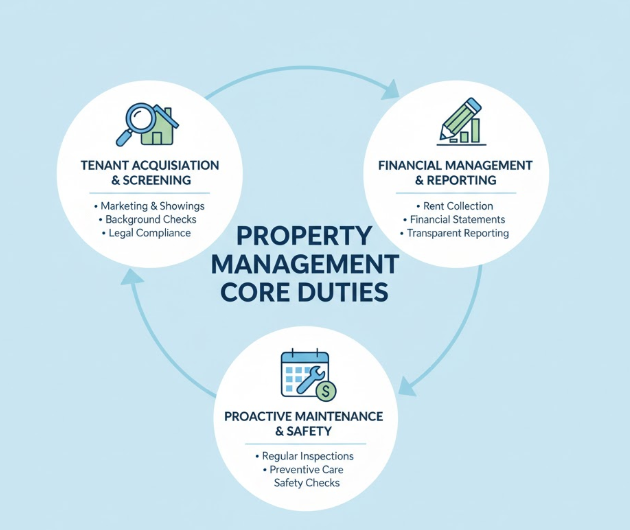
Tenant Acquisition, Screening, and Relations
A crucial responsibility is efficiently marketing properties, showing units to prospects, and subsequently conducting thorough tenant screenings. Managers must assess applicants by checking criminal history, reviewing credit reports, and verifying income sources. This rigorous process protects owners from potential future issues and ensures compliance with federal and local landlord-tenant laws. They must handle the entire leasing process, including preparing legally compliant lease agreements and collecting security deposits. Property managers are the crucial link between owners and tenants, handling day-to-day inquiries and addressing complaints promptly.
Financial Management and Reporting
Effective financial management demands timely rent collection, the enforcement of late fees, and the maintenance of accurate accounting records. Property managers should regularly provide detailed financial statements, typically on a monthly and yearly basis, giving a comprehensive overview of the property’s health, including income, expenses, and vacancy rates. Transparency is crucial; many companies now offer online portals for real-time access to financial data. Managers must ensure all financial aspects align with the owner’s objectives and maximize the property’s profitability.
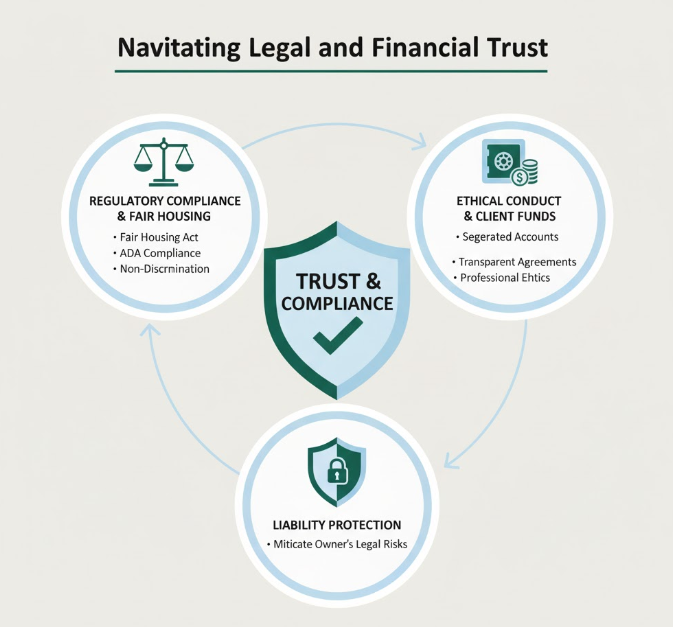
Navigating Legal and Financial Trust
Professional conduct requires managers to adhere to strict ethical codes, ensuring legal compliance, and protecting client funds.

Regulatory Compliance and Fair Housing
Property Managers must ensure adherence to all relevant local, state, and federal laws, including the Fair Housing Act and the Americans with Disabilities Act (ADA). They are expected to operate consistent with fair housing laws and shall not discriminate in the management or rental of property based on any protected class. When dealing with issues like evictions or lease violations, managers must follow the legal process meticulously to minimize liability risks for the owner. Furthermore, Property Managers should strive to stay informed about relevant matters affecting the property management field on local, state, and national levels.
Ethical Conduct and Handling of Client Funds
A key expectation is adherence to high standards of business ethics and professionalism. Managers must serve the Client and act in the best interests of the Client and must protect the public against fraud and unethical practices. They shall use written agreements outlining all responsibilities and fees. Property Managers must refrain from misleading potential clients about a property’s rental market value and must disclose all pertinent facts relating to any transaction. Critically, managers shall hold all funds received on behalf of others in compliance with applicable laws, and shall not comingle the funds with personal or other business funds. Managers must provide competent service only within their area of expertise, refraining from the unauthorized practice of law or accounting unless independently licensed.
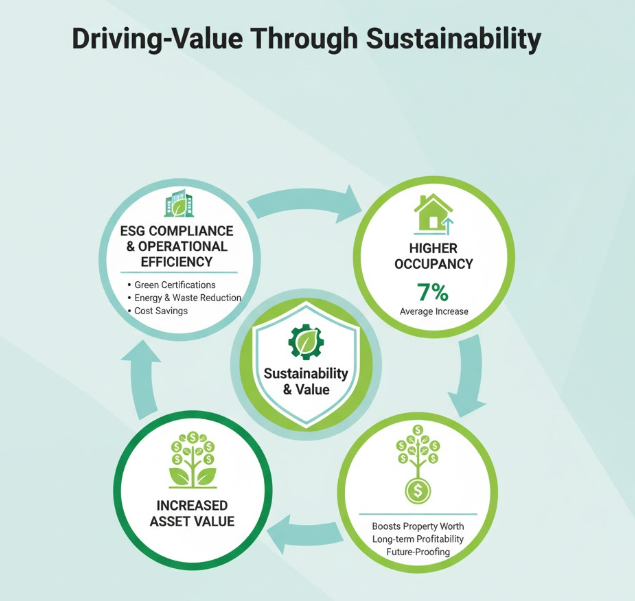
Driving Value Through Sustainability
By 2025, Environmental, Social, and Governance (ESG) principles are redefining asset performance and long-term viability, especially since over 70% of existing structures are expected to remain in use until 2050.
ESG Compliance and Operational Efficiency
ESG principles, driven by environmental care, social responsibility, and ethical oversight, guide decisions that affect both tenant well-being and asset performance. Buildings with green certifications see 7% higher occupancy rates on average, making sustainability a measurable value driver. Managers are expected to implement environmental efforts focused on reducing energy use and waste. This includes practical steps like upgrading to LED lighting and installing low-flow water fixtures, which cut costs immediately. Data-driven analysis, facilitated by real-time energy monitoring systems, helps teams prioritize upgrades that cut costs while meeting 2025 efficiency targets.

Proactive Maintenance and Safety
Property managers are expected to implement a comprehensive preventive maintenance plan, scheduling regular upkeep tasks to prevent issues before they arise. They conduct regular inspections (typically every three months) of the interior and exterior to identify potential issues. Maintenance must cover seasonal tasks, such as HVAC system tune-ups and checks of electrical systems, to minimize unexpected costs. Crucially, managers shall manage all properties in accordance with the safety and habitability requirements of the local jurisdiction.
Modern Challenges: Technology and Market Risks
The industry is undergoing a profound transformation driven by technology adoption, including PropTech solutions and AI, which redefine efficiency and tenant services.
The Digital Tenant Experience and PropTech Solutions
Tenant expectations mandate high levels of communication and digital fluency. An overwhelming 92% of renters state that response time during the leasing process influences where they choose to live, and 90% emphasize the quality of interactions with the management team. Managers are leveraging PropTech solutions like cloud-based systems for real-time updates and centralized data storage, enhancing security and collaboration. AI is emerging as a game-changer, automating tasks like tenant screening and maintenance scheduling. Predictive AI analytics forecasts rental prices and identifies maintenance needs, helping managers make informed decisions.
Table 1: Technology Integration in Property Operations
| PropTech Solution | Manager/Owner Benefit | Tenant Experience Benefit |
| AI Lease Abstraction | Automated summarization; Reduced administrative workload | Faster lease processing; Accurate records |
| IoT/Smart Sensors | Real-time energy monitoring; Predictive maintenance | Personalized energy management; Enhanced security |
| Online Rental Marketplaces | Increased visibility; Streamlined tenant acquisition | User-friendly interface; Advanced search filters |
Navigating Market Challenges and Antitrust Risk
Managers face significant operational hurdles like package management due to the surge in e-commerce, which is expected to grow at a rate of 7% over the next 3 years. Owners expect managers to adopt solutions such as smart lockers or automated package rooms to streamline distribution and alleviate staff burnout. Furthermore, property managers must strictly comply with antitrust laws. The use of algorithmic price setting tools that share nonpublic, competitively sensitive information among landlords to align pricing has been identified as a mechanism that can function as a cartel, resulting in above-competitive rents. Price coordination and price fixing are already illegal nationwide. Property managers should be aware that sophisticated software offering accounting and vendor management services is permissible, but any tools facilitating illegal price coordination should be avoided.
Key Takeaways
• Technology is Mandatory: Embracing PropTech, AI, and cloud solutions is crucial for efficiency, automating tasks, and meeting digital expectations (92% of renters prioritize quick response time).
• Compliance and Ethics: Managers must adhere to the NARPM Code of Ethics, ensure Fair Housing compliance, and strictly follow antitrust laws by avoiding price fixing software.
• Value is Tied to ESG: Proactive implementation of sustainability strategies (LED lighting, low-flow fixtures) helps cut costs and enhances asset value, as properties with green certifications see higher occupancy rates (7% on average).
• Proactive Operations: Core duties must include thorough tenant screening, transparent monthly/yearly financial reporting, and preventive maintenance planning.
• Market Challenges: Managers must invest in solutions for package management and centralization strategies to combat employee burnout and high turnover.
——————————————————————————–
FAQ (Frequently Asked Questions)
How can energy efficiency upgrades benefit my building’s performance? Upgrading systems like HVAC and lighting reduces operational costs and carbon footprints. Many tenants prioritize eco-friendly spaces, which can boost retention and marketability.
What are the primary challenges facing property managers in 2025? Key challenges include managing the surge in package deliveries, rising operational costs, employee burnout, adopting rapidly changing technology (AI), and navigating evolving government regulations, especially regarding transparency (“junk fees”).
What ethical standards must Property Managers uphold regarding client funds? Property Managers must hold all funds received on behalf of others in compliance with applicable laws and regulations and shall not comingle the funds with personal or other business funds. They must also provide accurate and timely financial reports to the client.
What level of communication should I expect regarding my property’s financial health? You should expect detailed financial statements regularly, typically monthly and yearly, covering rent status, expenses, vacancy rates, and net income. Many services offer real-time data access through online portals.
How does algorithmic pricing affect rent in competitive markets? Research indicates that markets with high algorithmic pricing adoption saw significantly higher rents (up to 4% higher in saturated markets) and lower occupancy rates, suggesting coordination rather than purely competitive pricing. This practice, when used for price fixing, is illegal.
References
1. FirstService Residential. (2025). 2025 BENCHMARK editions on operating costs – FirstService Residential.
URL: https://www.fsresidential.com/
2. NARPM. (Bilinmiyor). Code of Ethics and Standards of Professionalism for the National Association of Residential Property Managers.
3. Proprli. (2025). ESG Compliance 2025: What every property manager must prepare for.
4. Proprli. (2025). Property management innovation 2025: New trends in real estate management.
5. HUD. (2022). Residential Property Management Regulatory Options Summary of submissions.
URL: https://consult.hud.govt.nz/policy-and-legislation-design/property-managers-review
6. Portland Government. (Bilinmiyor). Economic and Real Estate Development Impacts – Supplemental Scope of the Problem Two of the three largest landlords in Portland.
URL: https://www.portland.gov/
7. M&D Real Estate. (Bilinmiyor). Expectations of Residential Property Management | M&D Real Estate.
URL: https://www.mdrealestate.com/
8. Luxer One. (2024). The Top 5 Challenges Facing Property Managers in 2025.
URL: https://www.luxerone.com/
9. Buildium. (2025). What Renters Expect from Property Managers in 2025.